


Indian Destination Wedding in Seville — Traditions, Rituals and Planning Guide
Indian weddings are among the most vibrant and meaningful celebrations in the world.
Rich in symbolism, colour and tradition, they often unfold across several days and bring together families, rituals and cultural heritage in a deeply emotional way. In recent years, many couples have begun to combine these traditions with destination celebrations in Europe, creating wedding experiences that feel both personal and unforgettable.
Seville has become an especially beautiful setting for Indian destination weddings. With its historic palaces, sun-filled courtyards and warm Andalusian atmosphere, the city offers an environment that naturally complements the scale and richness of Indian wedding celebrations.
For couples planning a Hindu or multicultural destination wedding in Spain, understanding the traditions, ceremonies and logistics involved is an important first step.
This guide explores the key rituals of an Indian wedding, the atmosphere of these celebrations and how couples can plan a multi-day wedding experience in Seville that honours tradition while embracing the beauty of southern Spain.
Understanding the Traditions of an Indian Wedding
Indian weddings are deeply rooted in cultural and spiritual traditions. Although each region and family may follow slightly different customs, many celebrations share a similar structure built around a series of rituals that unfold over several days.
These ceremonies are not only symbolic but also social, bringing together family members, music, dance and community participation. The atmosphere is joyful and expressive, with each ritual representing a different step in the couple’s journey toward marriage.
Because of this layered structure, Indian weddings often last between two and four days, sometimes even longer when hosted as destination celebrations abroad.
For couples planning a destination wedding in Europe, many of these traditions can be beautifully adapted to new settings while preserving their original meaning.


Pre-Wedding Celebrations: Mehndi and Sangeet
Mehndi Ceremony
The Mehndi ceremony is one of the most recognisable traditions in Indian weddings.
During this celebration, intricate henna designs are applied to the bride’s hands and feet. The patterns often include symbolic elements representing love, prosperity and happiness. Friends and family members usually gather for an afternoon or evening filled with music, colour and celebration.
In destination weddings, the Mehndi often becomes a relaxed outdoor event. Courtyards, gardens or terrace settings create the perfect atmosphere for guests to gather while enjoying music, food and the artistry of the henna designs.
Sangeet Celebration
The Sangeet is traditionally a night of music and dancing that brings together both families before the wedding ceremony.
Performances, choreographed dances and live music often form the centre of the celebration. The atmosphere is energetic and joyful, setting the tone for the wedding day itself.
For destination weddings in Seville, the Sangeet is often hosted in a palace courtyard or garden setting, where guests can celebrate together late into the evening.
Pre-Wedding Celebrations: Mehndi and Sangeet
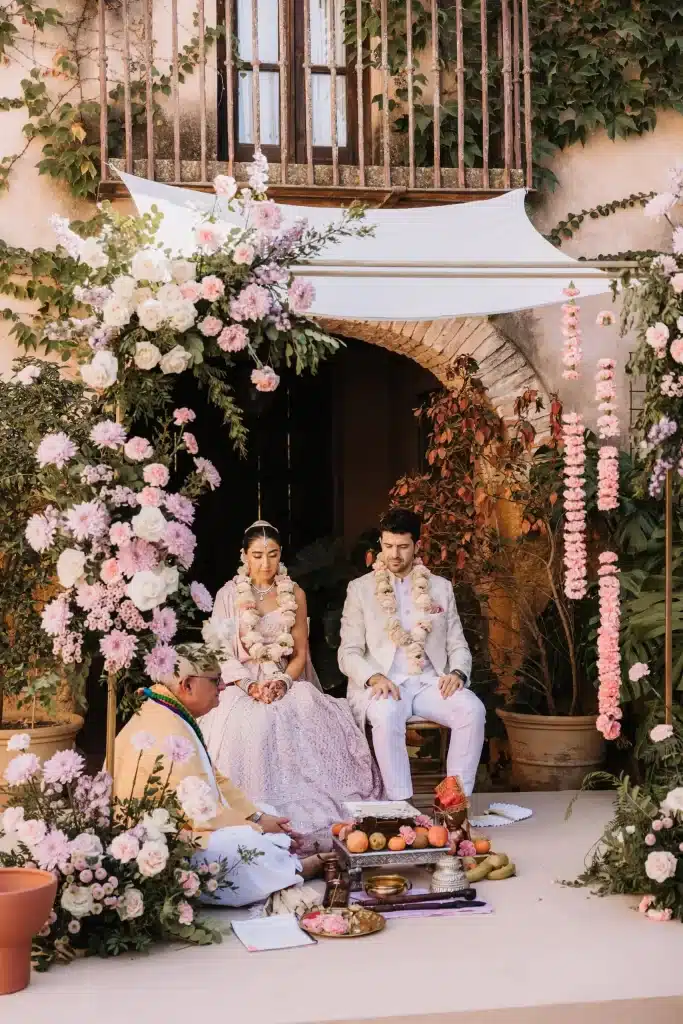
The Hindu wedding ceremony is the spiritual centre of the celebration. It usually takes place under a mandap, a beautifully decorated structure that symbolises the sacred space where the marriage rituals occur.
A priest guides the couple through a sequence of symbolic acts that represent commitment, unity and the beginning of a shared life together.
Baraat
The Baraat marks the groom’s ceremonial arrival.
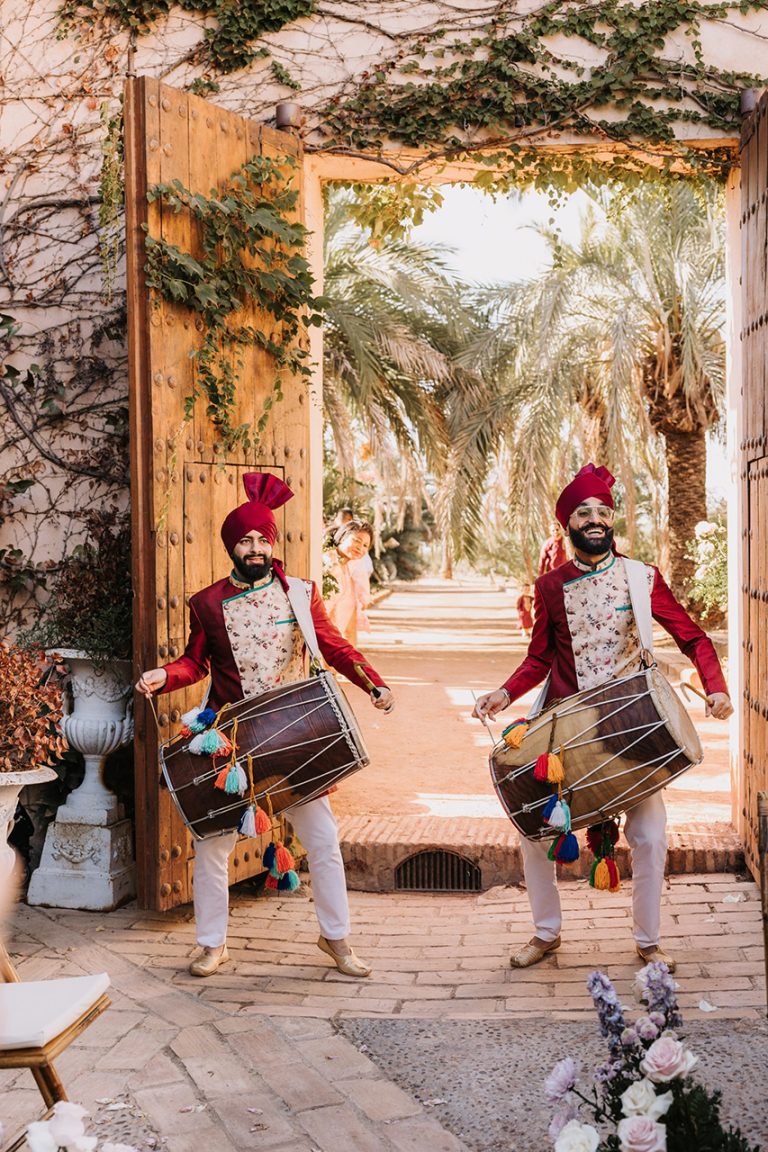
Traditionally the groom arrives accompanied by family and friends in a joyful procession filled with music and dancing. In destination weddings, this moment often becomes one of the most lively parts of the celebration, as guests gather to welcome the groom before the ceremony begins.
Kanyadaan
Kanyadaan is the moment when the bride’s parents symbolically give their daughter in marriage. The ritual represents trust, blessing and the union of two families.
Saptapadi – The Seven Steps
During the Saptapadi, the couple takes seven symbolic steps together around the sacred fire. Each step represents a promise related to love, respect, prosperity and spiritual partnership.
These vows form the spiritual foundation of the marriage and are considered one of the most important moments of the ceremony.
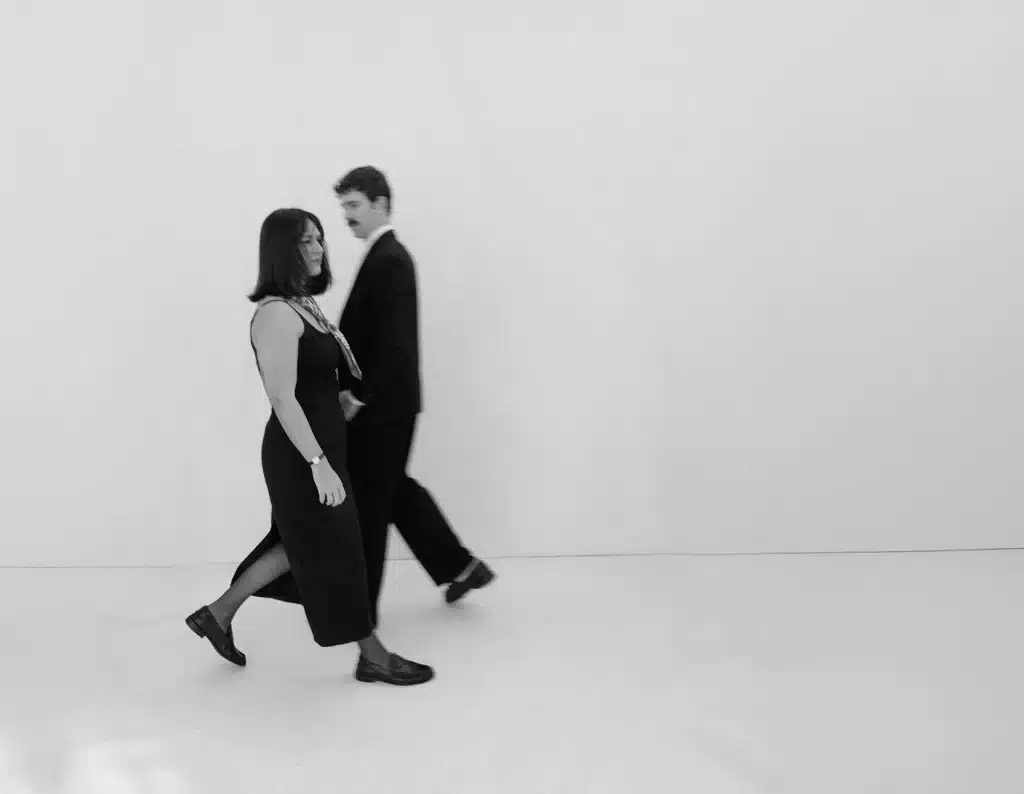
We’re Raquel and Iñaki, destination wedding photographers and filmmakers creating refined, emotional wedding stories across Europe.
Our work is inspired by fashion, cinema and real human connection. We focus on atmosphere, movement and honest moments to create timeless imagery that goes beyond trends.
Working with international couples who value beauty and meaning, we document weddings in Italy, France, Greece and beyond with an editorial yet soulful approach.
Traditional Indian Wedding Attire
Clothing plays a central role in Indian weddings, adding colour, symbolism and visual richness to the celebration.
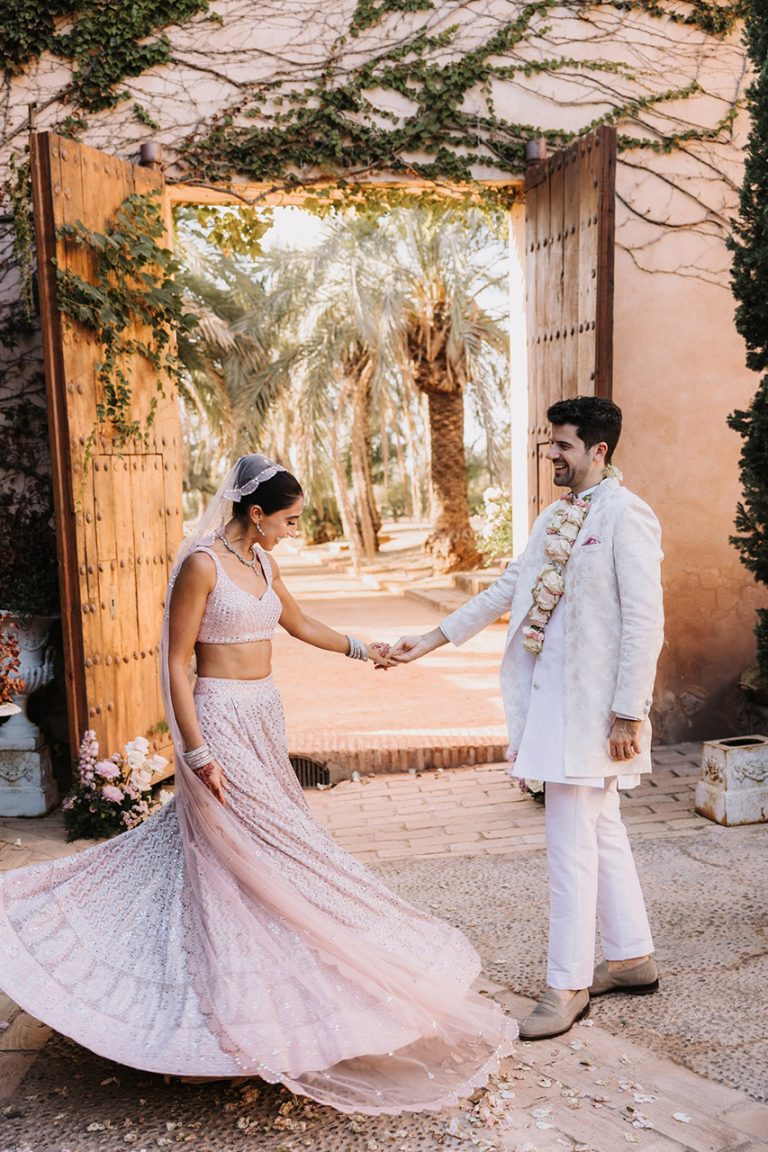
Brides traditionally wear a red or richly coloured lehenga or sari, often embroidered with gold details and intricate patterns. The colour red symbolises prosperity, happiness and marital bliss.
Grooms commonly wear a sherwani, sometimes paired with a turban and ceremonial accessories.
Destination weddings often allow couples to incorporate additional looks throughout the celebrations. It is common for brides and grooms to change outfits for different events such as the Mehndi, Sangeet and wedding ceremony itself.
The result is a visual narrative that evolves throughout the wedding weekend.
Music, Dance and Celebration
Music and dance are at the heart of Indian weddings, shaping the atmosphere of each celebration and bringing together families and guests in a vibrant and joyful way. Unlike many Western weddings where music is concentrated during the reception, Indian weddings often include musical moments throughout several days of festivities.
One of the most recognizable sounds during an Indian wedding is the rhythm of traditional percussion instruments. The dhol, a large double-sided drum played with sticks, is especially popular during the baraat, when the groom arrives accompanied by family and friends dancing through the streets or the venue entrance. Its powerful rhythm creates an energetic procession that sets the tone for the entire celebration.
Other traditional instruments sometimes heard during ceremonies or processions include the shehnai, a melodic wind instrument with a distinctive sound that has long been associated with auspicious occasions in Indian culture. In some celebrations, live musicians combine these traditional instruments with modern sound systems to accompany different parts of the wedding.
Dance is equally important. Pre-wedding events such as the sangeet are entirely dedicated to music and choreography, with family members performing dances that celebrate the couple and their story. These moments often become some of the most emotional and joyful parts of the entire wedding weekend.
As the celebrations continue into the reception, the music typically blends Bollywood songs, contemporary international music and traditional rhythms, creating an atmosphere that feels both festive and deeply rooted in cultural tradition.
Planning an Indian Destination Wedding in Seville
Planning an Indian destination wedding in Seville involves combining rich cultural traditions with the logistics of hosting a multi-day celebration abroad. Because Indian weddings typically include several ceremonies and large guest groups, thoughtful organisation is essential to ensure that the experience feels seamless for both families and guests.
Many couples begin planning their destination wedding in Spain between twelve and eighteen months in advance. This allows time to secure the right venue, coordinate travel arrangements for guests and design a celebration that honours cultural traditions while embracing the character of the destination.
Seville offers an excellent environment for this type of wedding weekend. The region is known for its historic estates, palace venues and spacious haciendas that can host multiple events across several days.
Choosing the Right Wedding Venue
One of the most important decisions when planning an Indian destination wedding in Seville is selecting a venue that can accommodate the scale and structure of the celebration.
Unlike many European weddings, Indian weddings often involve several events with different atmospheres. A relaxed Mehndi celebration may take place during the day, followed by a vibrant Sangeet evening and a formal wedding ceremony the next day.
For this reason, many couples choose venues that allow exclusive use for the entire weekend. Historic haciendas and palace estates near Seville offer multiple spaces such as gardens, courtyards and terraces that can host different ceremonies and gatherings.
These venues also allow the wedding design to evolve across the weekend, creating a natural flow between events.
Working With a Planner Experienced in Indian Weddings
Because Indian weddings include specific rituals and ceremonial structures, many couples choose to work with planners who have experience organising multicultural or Indian celebrations.
An experienced planner can help coordinate elements such as ceremony logistics, traditional décor, music and the scheduling of multiple events. They also assist with vendor coordination, guest transportation and the overall timeline of the wedding weekend.
For destination weddings, planners often become the key point of contact for local venues and suppliers. This allows couples and their families to focus on the celebration itself rather than the logistical details.
Planning a Multi-Day Wedding Timeline
Indian weddings rarely take place on a single day. Instead, they unfold across a sequence of celebrations that build anticipation and bring families together over time.
A typical destination wedding weekend in Seville might look like this:
Day one often begins with guest arrivals and a welcome gathering in the evening. Couples sometimes organise an informal dinner or rooftop celebration in the historic centre of the city.
Day two may include the Mehndi celebration during the afternoon, followed by the Sangeet in the evening. These events are often colourful and energetic, filled with music, dancing and family performances.
The wedding ceremony usually takes place on the third day. Guests gather beneath the mandap for the Hindu ceremony, followed by a formal dinner and a night of celebration.
Some couples also host a farewell brunch the following morning before guests return home.
CHECK YOUR DATE 2026 / 2027
We are available across Europe to create exceptional wedding weekend experiences. Say hello and tell us a bit about your plans, we’d love to hear from you!
Guest Experience for Destination Weddings
Guest experience is an important part of destination weddings. When friends and family travel from different parts of the world, the celebration becomes more than a single event. It becomes a shared journey.
Seville offers many ways to create memorable experiences for guests between wedding events. Visitors can explore historic neighbourhoods, enjoy Andalusian cuisine or visit landmarks such as the Alcázar and the cathedral.
Many couples also organise cultural activities such as flamenco performances or guided city tours, allowing guests to experience the spirit of Andalusia while celebrating the wedding weekend together.
Cultural Traditions and Ceremony Logistics
Hosting a traditional Hindu wedding abroad often requires careful coordination to ensure that ceremonial elements are respected.
Couples may bring a priest from their home country or work with officiants who specialise in Hindu ceremonies in Europe. The mandap, ceremonial fire and ritual materials must also be arranged in advance with the venue and wedding planner.
Many destination venues in Spain are accustomed to multicultural weddings and can adapt their spaces to accommodate these rituals. Outdoor courtyards and gardens often provide beautiful locations for the ceremony.
Designing the Atmosphere of an Indian Wedding in Spain
One of the most beautiful aspects of Indian destination weddings is the way cultural traditions interact with the character of the location.
In Seville, colourful floral décor, traditional fabrics and ceremonial structures create a striking contrast with the city’s historic architecture and warm Mediterranean light.
Design elements often include vibrant textiles, floral installations, lantern lighting and decorative mandaps that reflect the visual richness of Indian celebrations.
When combined with Andalusian architecture and open-air venues, the result is a wedding atmosphere that feels both culturally authentic and visually unforgettable.
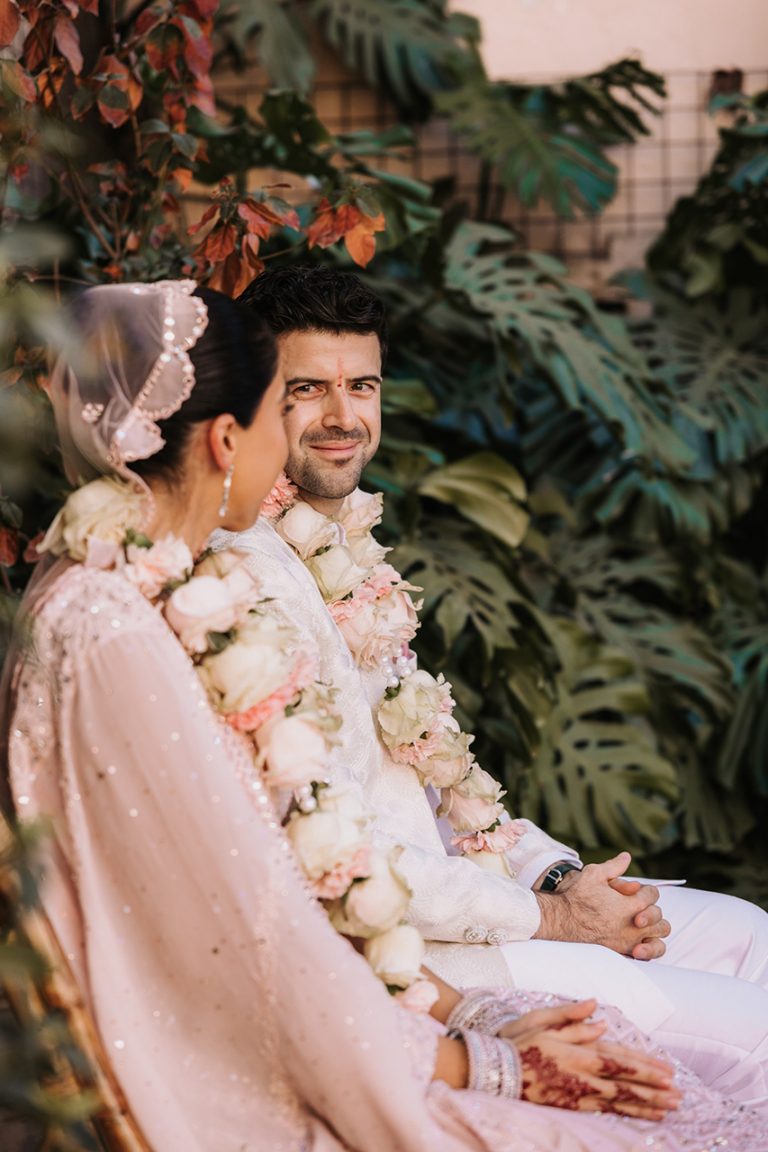
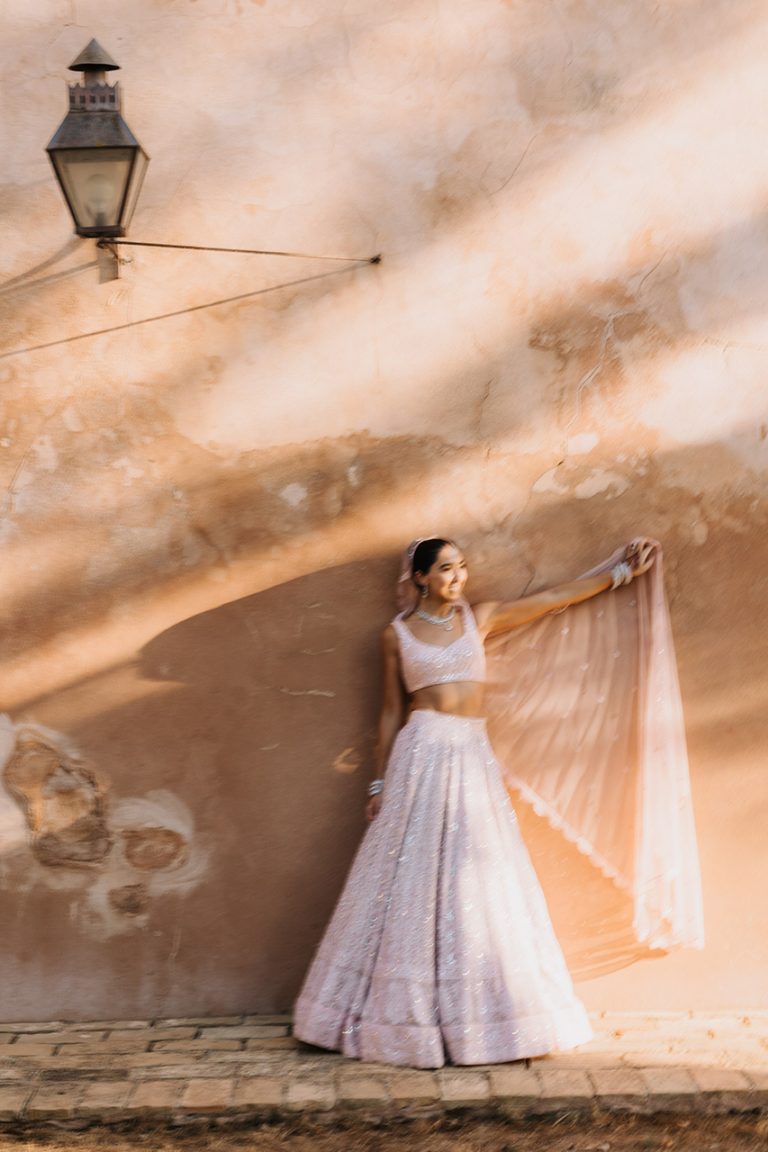
Photographing Indian Weddings in Seville
Indian weddings are visually extraordinary celebrations.
The colours of traditional clothing, the movement of dance and the symbolism of rituals create a visual narrative that unfolds over several days.
For photographers, documenting these weddings means capturing both the energy of the celebration and the quieter emotional moments between rituals.
In a destination setting such as Seville, the architecture and natural light add another dimension to the story. Historic courtyards, palace gardens and Andalusian landscapes create a beautiful backdrop for portraits and ceremony moments alike.
Frequently Asked Questions About Indian Weddings in Seville
Can you have a traditional Hindu wedding ceremony in Spain?
Yes. Many destination weddings in Spain include traditional Hindu ceremonies. Couples often bring a priest or coordinate with officiants experienced in Hindu rituals to guide the ceremony.
How long does an Indian destination wedding usually last?
Most Indian weddings take place over two to four days. Events often include a Mehndi celebration, Sangeet, the wedding ceremony and additional gatherings such as welcome dinners or farewell brunches.
Is Seville a good location for an Indian destination wedding?
Seville offers a beautiful combination of historic venues, warm climate and vibrant cultural atmosphere. Many estates and haciendas near the city provide large outdoor spaces that work well for multi-day celebrations.
Do guests usually stay for the entire wedding weekend?
Yes. Destination weddings often become shared travel experiences for guests. Friends and family usually arrive several days before the wedding and participate in multiple celebrations throughout the weekend.
contact us

Hey, we are Raquel and Iñaki
_
About Mosu Studio:
At Mosu Studio, we document destination weddings across Europe with a refined, editorial approach, combining digital imagery, 35mm film photography, and Super 8 motion to create timeless wedding stories.
_
Planning an Indian destination wedding in Seville is an extraordinary experience.
These celebrations bring together family traditions, vibrant rituals and meaningful moments that unfold across several days. When hosted in a destination like southern Spain, the result is a wedding that feels both culturally rich and deeply memorable for everyone involved.
At MOSU Studio we document destination weddings across Europe for international couples who value natural storytelling and timeless imagery. Indian weddings are especially beautiful to photograph because of their colour, emotion and the rhythm of ceremonies that unfold throughout the celebration.
If you are planning an Indian destination wedding in Seville or anywhere in Spain, we would love to hear about your plans.